
If there’s one thing the last year has taught us all, it’s how little we actually use our cars.
Did you know that across the world, cars are parked between 92 and 96% of the time, and we pay all that money for them to sit idle.
Having time to think on this and the amount we pay out as a two-car household, I realised in October that we could drastically reduce our outgoings by ditching one of the two cars we own, splitting the cost and most importantly, going electric.
Now the only way you’re going to do this and actually save money is to buy a used EV. New ones are still way too expensive…well, any brand-new car is, in reality, it needed decent range, but nothing too outlandish.
The ability to drive 120 miles in one go for the occasional trip up north to visit family, a quick stop for 20 minutes wouldn’t have been a deal-breaker on the typical 2-hour journey, but I felt 120 was a good figure.

How it started
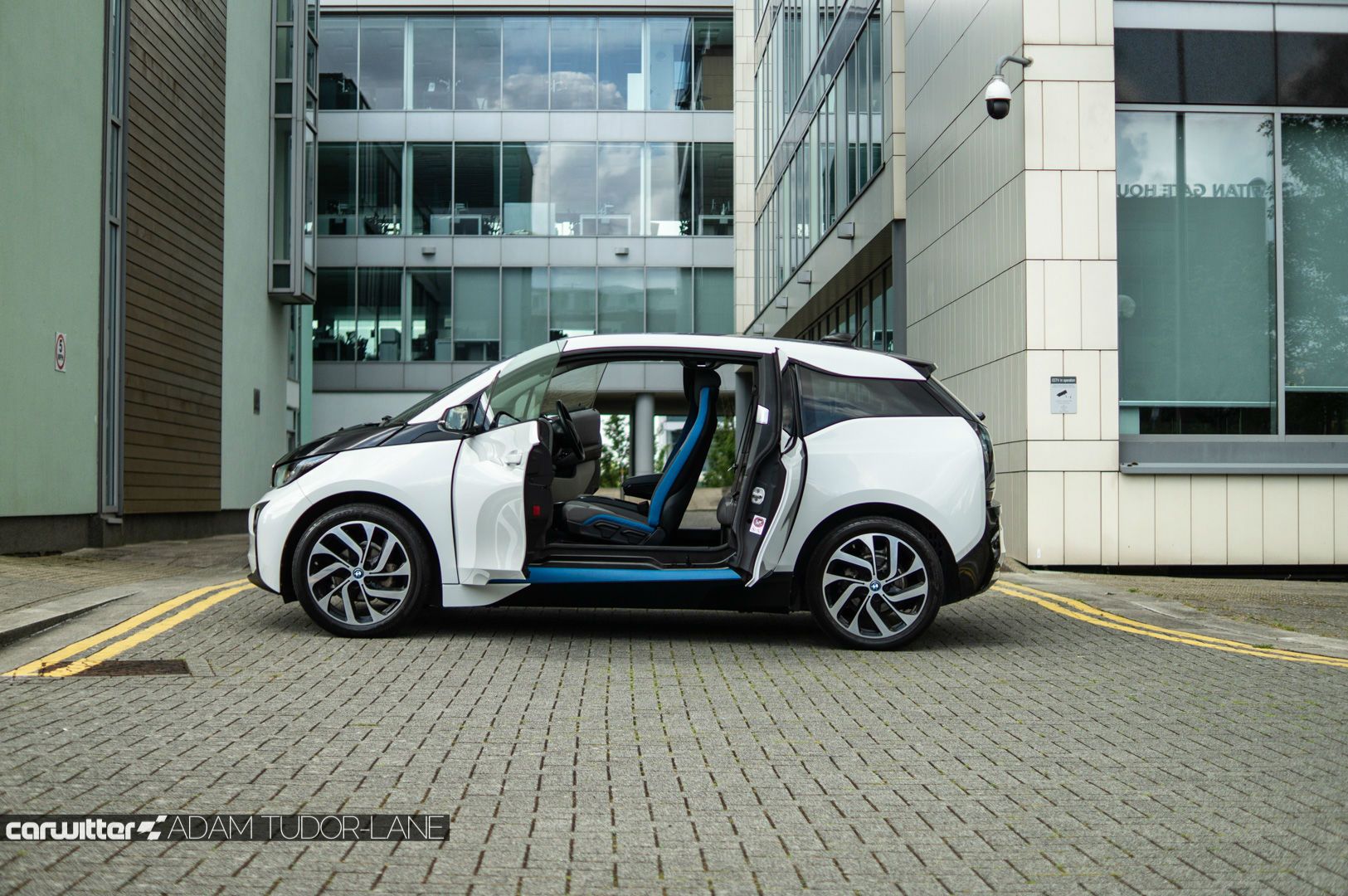
Back in 2014, I drove the factory fresh BMW i3. Made of carbon composite and aluminium; it felt like the future of motoring, even back then. A quick search online and I found used examples of them for as little as £10,000, not the £30k+ they were new.
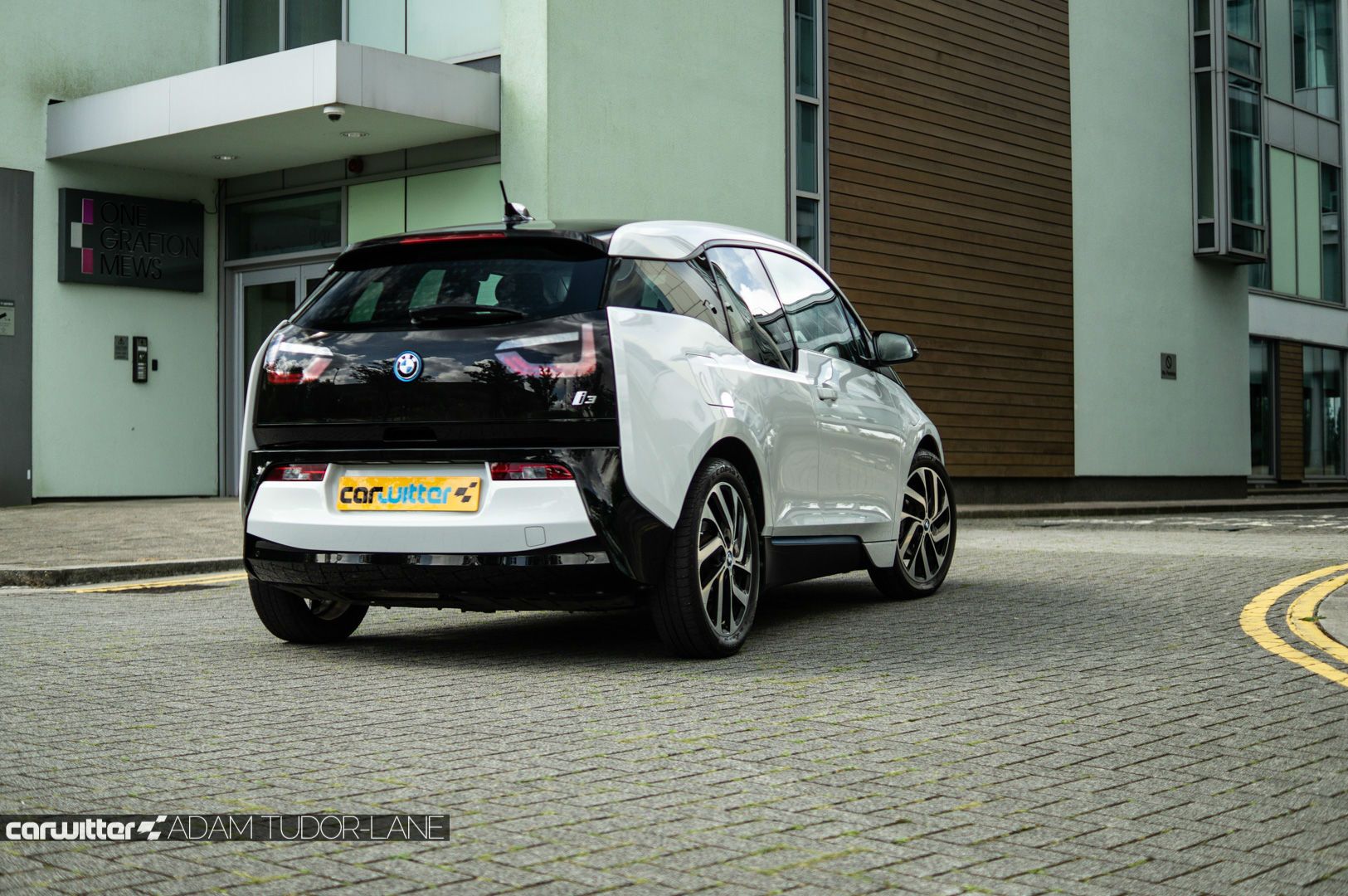
Agreed, they’re a Marmite car. It’s certainly not the prettiest of vehicles, but I love them for their modernity. One could’ve been placed on the set of Blade Runner 2049 or Minority Report and it wouldn’t look out of place. Still, nearly 8 years on, there’s nothing as futuristic on our roads.
Further research led me to hunt out the i3 REx, aka the cure to range anxiety. In the boot floor of the little i3, BMW shoehorned in a 650CC petrol scooter engine. This can be fired up and used to generate electricity to charge the battery while you’re driving. The little 9-litre tank will give you about 80 miles of range.
Yes, yes, I know, it’s not a ‘pure electric’ vehicle, but it gives you the option for those longer jaunts. And the whole idea is to save money. 90% or more of our driving will be back and forth across grid city, so they’ll be no need to use the REx, but it’s nice to have it.

Can switching to an EV save you money?
Now it was on to the man math, can I get a shiny new toy and it make financial sense? Yes.
There are numerous online calculators to compare your current vehicle with the EV you’re thinking of; tap in the cost of fuel and your price per kWh of electricity at home, your annual mileage, and it will do the rest.
Over 10,000 miles, the cost of petrol for the car we were looking to get rid of was £1,585. The BMW i3, £500. So a third of what petrol would cost. The cost per mile drops from 15.4p to 5p with the EV.
Pretty quickly, that made my mind up. Sell the petrol car that had covered a little over 3,000 miles last year and switch to an EV.
Originally the idea was to do this on a budget, cheap motoring and all. That would have left us with a 60-70 mile battery range i3. Perfectly fine for around town. But as this was a long-term idea, 8 to 10 years, it made sense to look for the 2017+ model with a 110/120 miles EV range plus the REx.
More money, but still cheap in the long run. Loan agreed, the monthly payments split 50/50 equals just over £100 a month. There’s no car tax to pay, and a full charge at home from 0 – 100% costs £4.30.
There’s also no real servicing to be done with many EVs due to so few moving parts and the lack of oily bits. As a result, most only need a check over every two years instead of annually. They’re also lighter on brakes, so those don’t need changing as often.
For two cars, we were paying between £400 – 600 a year on servicing alone. Switching one out to an EV is a huge saving every other year.


Fuelling up at home
The master plan was in action; it was time to get the house ready to become an electric fuelling station. I can’t stand many of the wall boxes on the market; they’re just plain ugly or stick out like a sore thumb.
Rolec and their Wallpod seemed the obvious choice; they come in many colours and aren’t that obtrusive. Going for a black/grey combo, the charger was installed by Powered Solutions LTD in less than two hours, even with a long 6-metre cable run under a pathway to the garage.
House ready, now we had to find an i3 to make our own.
Finding the right used BMW i3
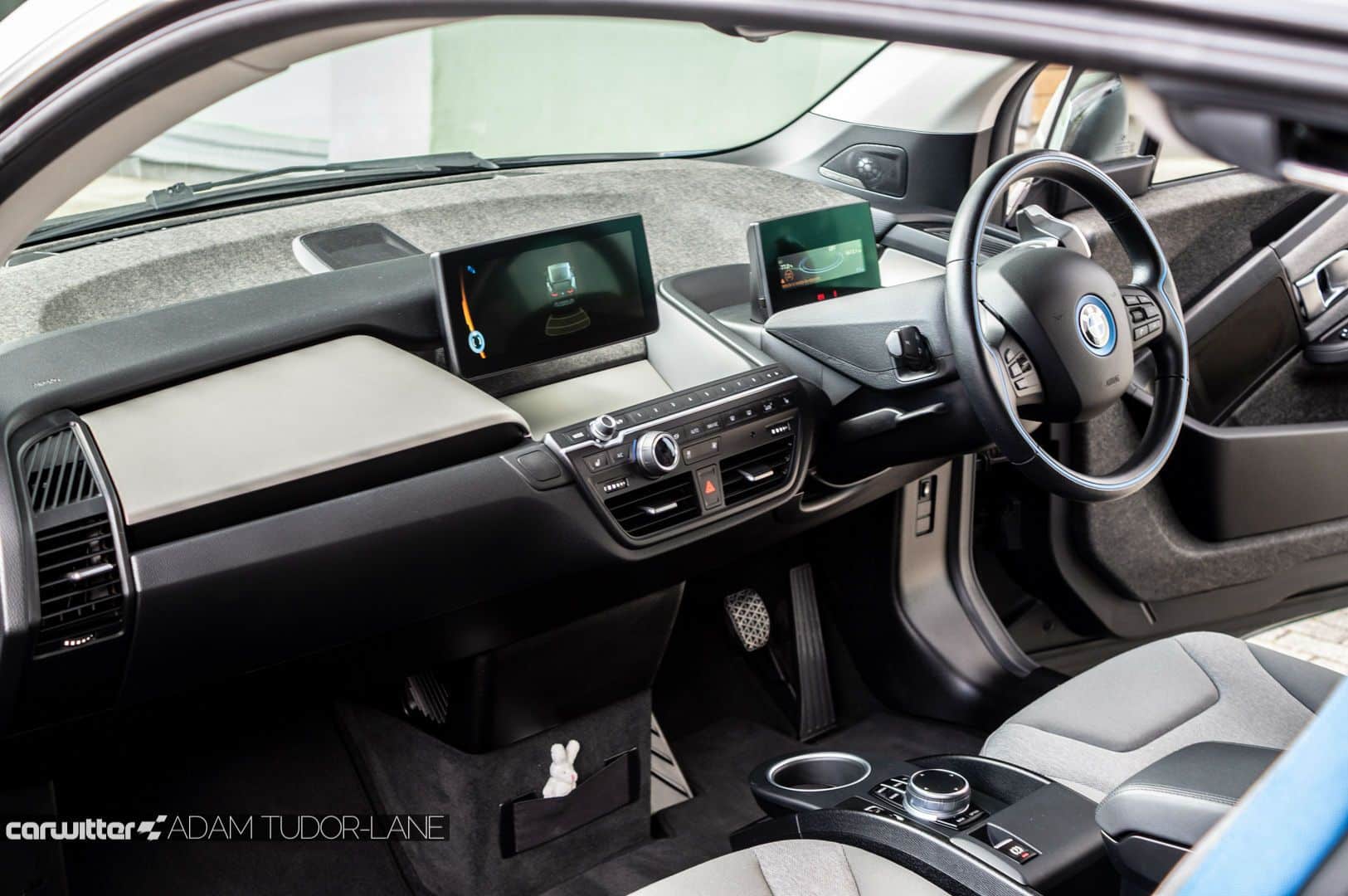
Even though the i3 came in one ‘spec’ as it were, it was pretty granular in terms of the optional extras. The large infotainment screen wasn’t standard, nor were LED headlights. It’s always nice to have decent sound in your car, and the boggo setup for the i3 was just two-door speakers…great. So the Harmon Kardon was also a must-have.
Add those three together, and it soon narrows what’s available on the market. We’d already had a quick test drive in January of this year to make sure the i3 was the right car to pursue, but in this proper search, we only went to look at one.
It ticked all the boxes, REx, Harmon Kardon, LED headlights, bigger nav screen…and white. It had been up for sale for the best part of a year, the mileage was 33k, and it was an early 2017 car meaning no road tax.
You don’t really want to get an EV with low mileage; unlike traditional cars, it can actually hurt the battery being sat unused for long periods. Ours had been used by the business owner as a runabout to and from work occasionally over 2020, so it shouldn’t have been sat idle for too long.
Test drive done, we went to haggle on the price as it had been up for sale for the best part of a year. We managed a £500 reduction but walked away. Keeping a beady eye on other i3’s over the next week it was soon clear that ones with this spec were few and far between…we could have been searching months to find one like this again, and no doubt it would be at a higher price.
Loan finalised, we called back and placed a deposit. Picking it up a week later.
Living with a used BMW i3
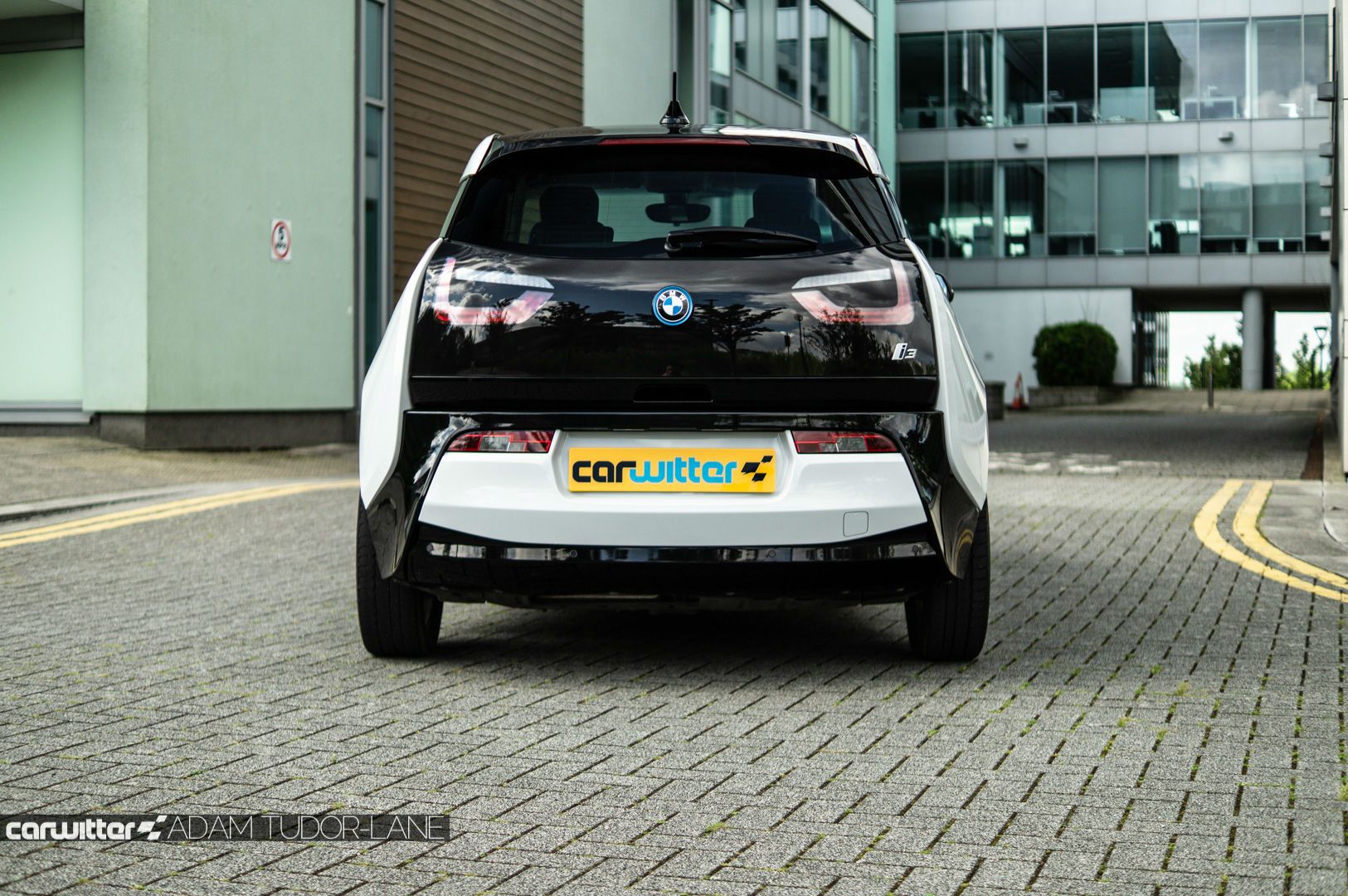
That was back in March 2020, it’s now seven months on, and I can confirm the BMW i3 is an amazing vehicle.
Covering 3,000 miles thus far, we’ve only ever charged at home; there’s simply been no need to use a charger out in the wild – largely thanks to the REx. 3,000 miles of driving has cost £130 in electricity, and around £50 in petrol, the petrol tank is diddy, so £8 normally fills it up.
90% of the time, it’s used around town, on 10-15 mile round trips. So that means we need to charge it roughly once every two weeks. The other 10% are slightly longer journeys to surrounding towns to visit family and friends which can be a 40-mile round trip. Then there’s the monthly drive of 110 miles one way to visit family up north.
Having the range extender gives you a safety blanket that you can make longer journeys without having to think about charging, or the worry of dodgy charging networks and broken chargers. Just fill the tank and you have an extra 80 miles ready to go.
You rarely see a little i3 out of a town or city; we can make long trips of an hour or two and not see a single little BMW companion. It seems that owners must have relegated them to being a town vehicle, which is a great shame if you optioned the Rex. They can do long journeys with ease, so don’t be scared!
Plenty of range
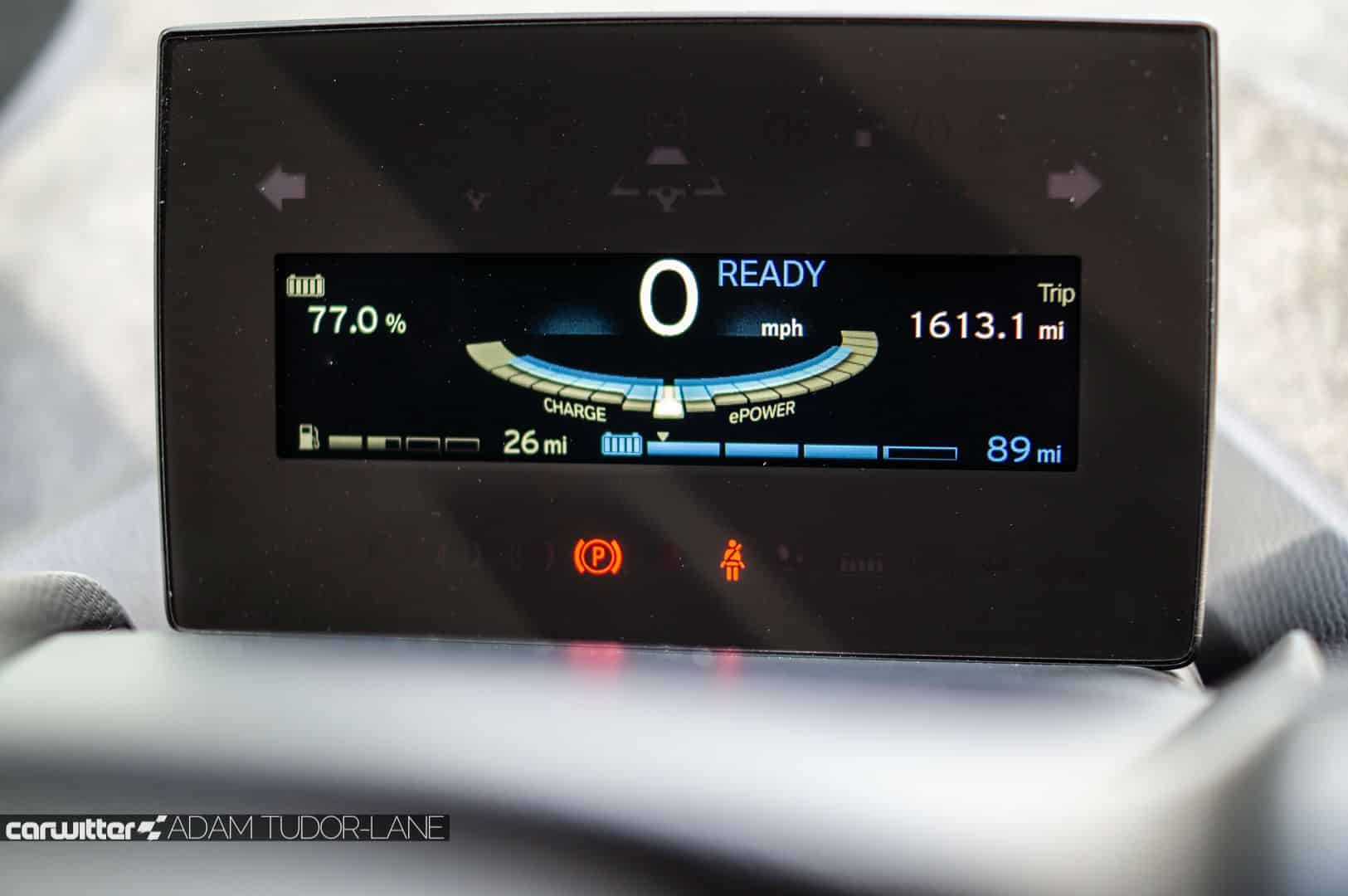
Yes, I still get a little range anxiety on longer journeys. But the range actually seems to be pretty damn accurate; yesterday, I left home with 110 miles showing on the dash. Drove 48 and still had 65 miles left; returning home the same way equalled another 48/50ish miles and I was left with 28% charge or 36 miles.
Add that all together, and my actual range would have been somewhere around 136 miles. Now that was driving in ‘ECO Pro’ which lowers the top speed to 65 MPH and reduces energy consumption for the heating – but unless you’re going on motorways, 65 is plenty quick enough for A & B roads.
It seems to me as though the regen actually adds quite a lot to the given range once you’re underway.
Being such a light vehicle also helps; it means the battery is a tiny 33.2 kWh (useable capacity is 27.2 kWh) but such a small battery means charging at home with a 7kW Type 2 socket is around four hours. Likewise, when we actually need to charge out and about, a rapid 50kW charger should mean we only need to stop for 15, maybe 20 minutes to get back to 80% from, say, 20.
Compare that with the Audi e-tank and its massive 86.5kWh battery, which would take around 10-12 hours to charge from near-empty via a 7kW home charger. And for reference, the e-tank (e-tron) gets a poultry 200 miles range.
Around town, it’s the perfect car; nippy instant acceleration and a lack of gears make it ideal for typical urban situations. Exploiting gaps in traffic is a doddle, so is shooting away from the lights before the others have even selected a cog.
The perfect EV does exist
In this current climate, day and age, whatever you want to call it, the BMW i3 is the perfect car for the majority of town and city dwellers. I can’t praise it enough, and it’s desperately sad that BMW are ending production. The platform has so much more to give…but I’ll save that for another article.
It’s also made me far more conscious of the emissions being caused by ordinary ICE vehicles. I’ve actually started to feel guilty about driving non-electric cars, which is something I never envisaged would happen.
I can’t see myself purchasing another internal combustion engine car since owning the i3. I obviously knew that day would come, but I didn’t think it would come so soon.

