
Motorsport produces more data per second than almost any other sport on the planet. Hundreds of sensors per car, lap splits to the thousandth of a second, tyre temperatures, fuel loads, braking points, sector times. Most of it never reaches the public. But the data that does qualifying pace, track history, tyre strategy, points trajectories tells a genuinely useful story about who is likely to win.
This article looks at what the numbers actually say.
Qualifying Pace — The Most Reliable Single Predictor
Qualifying is the cleanest data point in motorsport, and the numbers back that up. Since 1950, the pole-sitter has gone on to win roughly 42% of Formula 1 races, a figure that has stayed remarkably stable across decades of car and rule changes.
It measures outright car and driver pace, stripped of traffic, strategy, and race-day chaos
Some drivers convert at a far higher rate than others. Max Verstappen sits above 75% for his career, while Charles Leclerc has historically converted under 20%
Track type shifts the number significantly: Monaco has historically converted poles into wins over 50% of the time, and in the modern hybrid era, Yas Marina has run even higher, largely because overtaking is so difficult at both venues
There’s a real gap between pole and P2, usually smaller than the gap between P3 and P6. That matters if you’re trying to work out whether second and third on the grid are genuinely quick, or just less slow than everyone behind them.
If a fan watches qualifying as closely as the race itself, are they already looking at the single most statistically meaningful number of the whole weekend?
Sector Times and What They Reveal About Car Characteristics
Overall lap times tell us who’s fastest, but sector times tell us why. Based on the track, each sector can signal to starting-line speeds or top-end power of a team’s car. Others will reveal mid-speed cornering efficiency and braking performance. All of this data is important, especially for motorsport betting odds and real-time predictions. As a car losing two tenths in Sector 1 but gaining three in Sector 3 isn’t just having an average lap, it’s telling us where it won’t be competitive on race day.
Sector times and overall race pace are just one part of the equation. It is important to take into account the strategy of a race. The type of tyre a team is on and decisions at crucial moments can make or break a race from a strategic standpoint. It is important to always keep that in mid as one great pit stop can push a driver into the lead in an instant.

Tyre Degradation — The Data That Decides Races
While on the topic of tyres, tyre degradation is measured in tenths or seconds of lap time lost per lap as the compound wears. It is dependent on the weather and race conditions for each car, as fighting for the lead will cause higher degradation than simply cruising along. Tyre degradation data is collected in every session and modelled to predict when a car should pit. This can be seen through free practices and qualifiers before the Grand Prix.
By practicing long-runs on harder compounds on Fridays and short stints on softer compounds for qualifiers, teams get a good grasp of their gear. When it comes to the race, it is up to the driver to control the degradation and win with a solid strategy instead of just speed.

Championship Points Trajectories and Momentum Analysis
Raw championship position can be misleading. Points-per-race average over the last six rounds gives a much more current read on a driver’s actual form. Over the years we have seen many turnarounds and close drivers’ titles in F1 alone, let alone the whole of motorsport.
Consistent points accumulation tends to reflect car-driver reliability and development trajectory, not just raw talent
Teams’ strategic behaviour visibly shifts late in a season, pushing hard for wins early, and preserving points once a title fight tightens
A fast car that retires often has a real championship ceiling that pure pace data won’t show you
NASCAR’s Track-Type Performance Splits
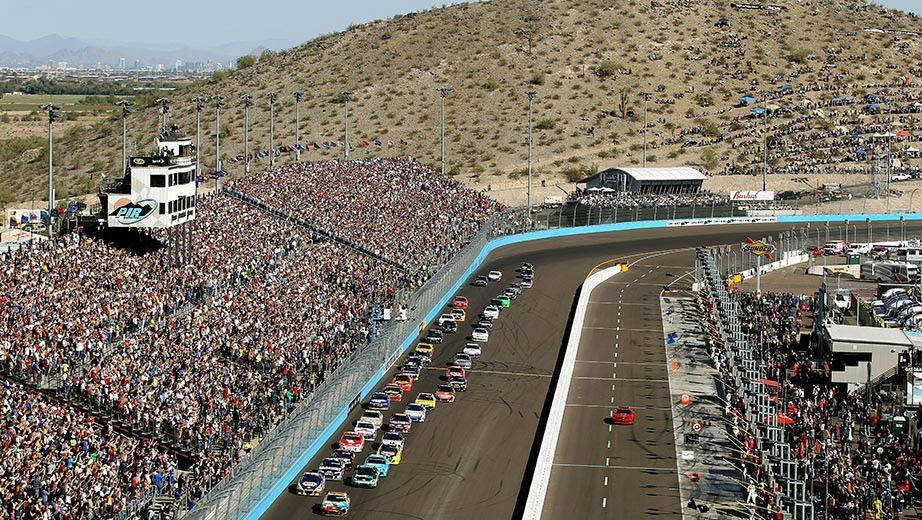
NASCAR can’t be read as one sport statistically. A driver’s superspeedway form tells you almost nothing about their short-track ability, and the reverse is just as true. The motorsports speedway forms are as follows:
Superspeedways: pack racing, restrictor-style rules, and genuine randomness that makes qualifying pace far less predictive than anywhere else on the calendar
Intermediate tracks: the largest single category on the current Cup Series schedule, which makes intermediate-track form the most heavily weighted factor in the championship
Short tracks: tight, aggressive, contact-heavy racing
Road courses: an increasingly large share of the modern schedule, rewarding a completely different skill set
Intermediates make up most of NASCAR’s calendar, which gives an edge for drivers strong in the format. This is usually where bigger championship gaps are created as superspeedway specialists lose the edge.
MotoGP and the Qualifying-to-Race Conversion Rate
Across F1, NASCAR, and MotoGP, the story holds up. Qualifying pace is the cleanest signal available on a given weekend, but it’s the data behind the data that actually decides who wins: degradation rates, track-type history, championship momentum, the stuff that never makes it onto a broadcast graphic.
That’s the real shift in how motorsport gets watched now. A generation ago, fans read a race off gut instinct and grid position. Today, the numbers are sitting right there for anyone willing to look past the lap time.
So the real question isn’t whether the data is available anymore. It’s whether knowing all of it makes the racing more interesting, or just easier to predict, and whether those are the same thing.

