
Amidst all the world’s current turmoil, EV sales last year jumped a huge 185.9% compared to 2019; electrified transport is well and truly making its mark. The next great conquest is two wheels.
Yes, it’s true; motorbikes and scooters produce very little in the way of emissions compared to their four-wheeled brethren. However, with many cities across the globe looking to ban all combustion-engine vehicles at some point or another, it’s only a matter of time before the humble motorcycle becomes an electric-only machine.
With that in mind, I braved the winter weather on a Qooder Oxygen to tell you all about it.

Qooder Oxygen
The Oxygen is a zero-emission scooter designed explicitly for built-up urban environments where congestion makes driving a car painful.
There’s a choice of a 2.65 or 3 KW version; the one seen here is the former; therefore, it has a top speed of around 30 MPH, the beefier 3KW model is capable of around 50 MPH. Range on them both is 40-50 miles depending on the outside temperature.
Beneath the seats sit two huge batteries, each weighing a considerable amount; make sure you’ve had your Weetabix in the morning if you’re planning to lift these up and out. There’s no real need to take them out, as they can be charged in situ, but you can also fit a helmet underneath the seat by removing one battery.
Yup, it can be used on one alone; naturally, the range drops by half, but it means you don’t have to lug around a helmet at your final destination.


Charging
Charging takes five hours to get to 80%, or 6 to get to the full 100. As there’s precious little room in the scooter, all the charging gubbins is separate. Now the name on the charger and batteries gives away the Qooders origins – Torrot.
The Qooder Oxygen is in fact, a rebranded Torrot Muvi, not a bad thing as Torrot have been going since the ’50s in one way or another, the latest iteration reborn in 2011. The Spanish company design and build the Muvi totally in Europe, no cheap Chinese copies here.
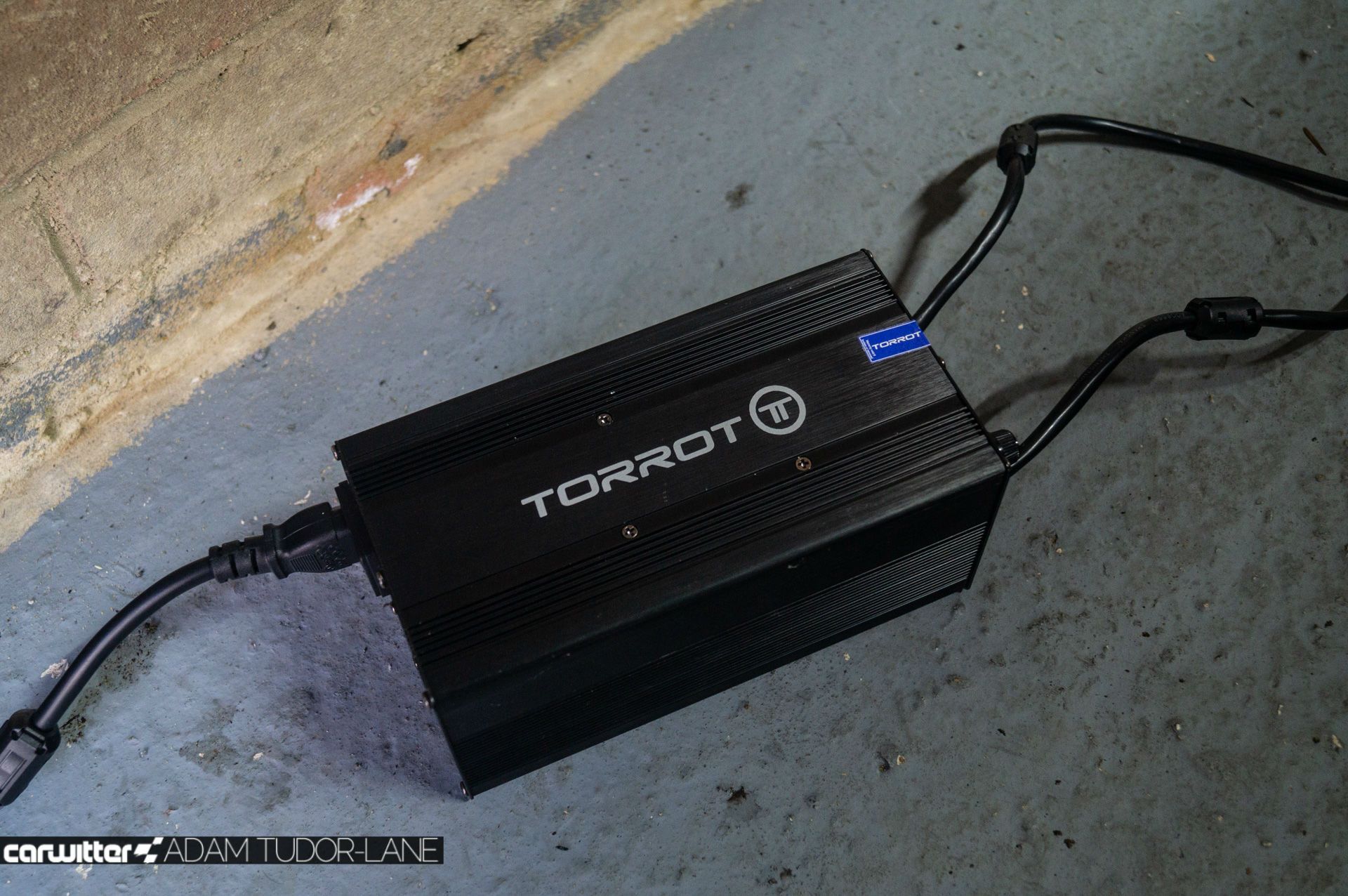
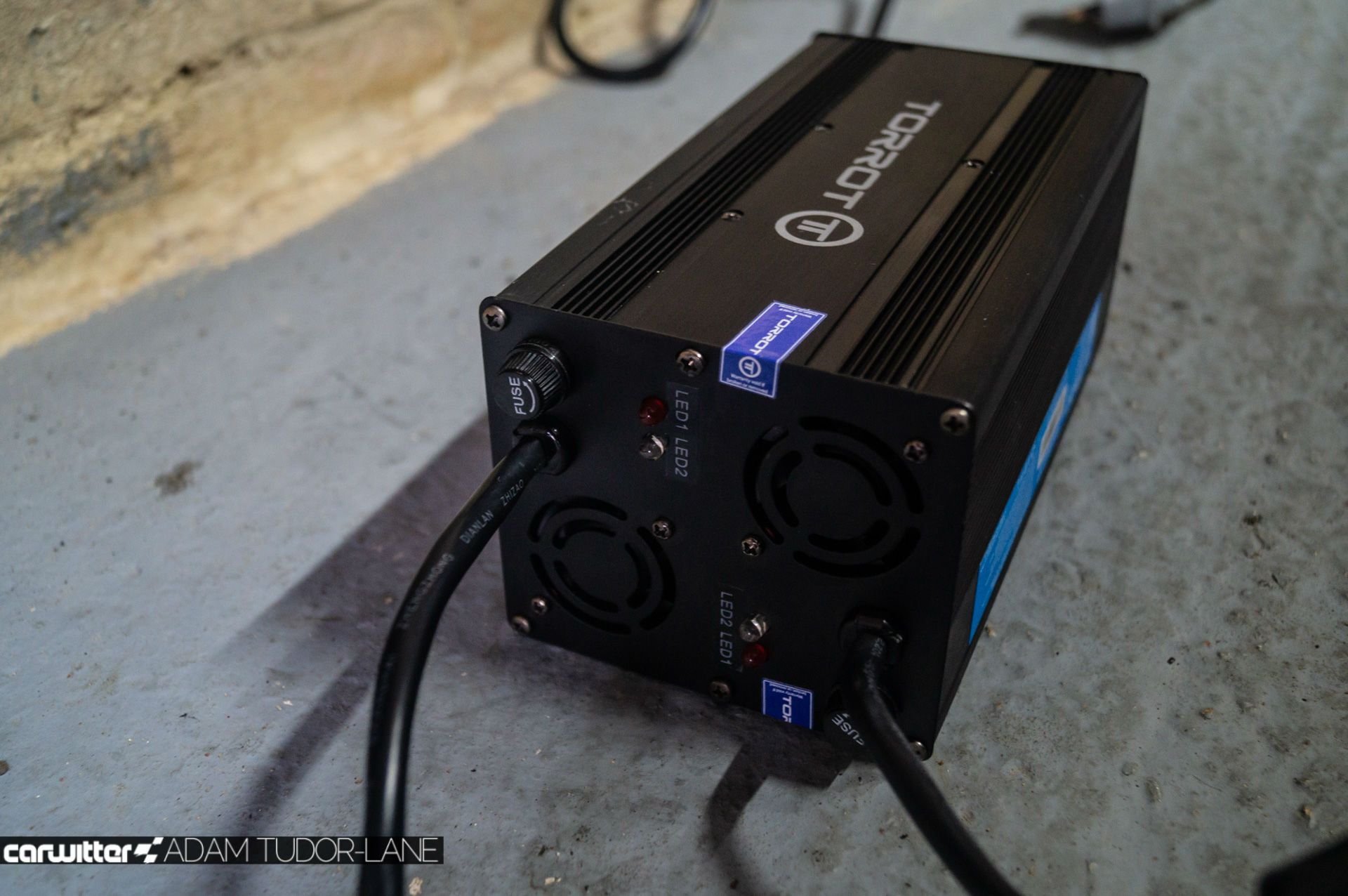
Anyway, back to the charger. It’s a small box, reminiscent of an inverter, with one lead that plugs into the mains; the other two go into the battery. This provides 48v and 5 amps to juice the beasty batteries back up.
The fans are pretty loud, the unit only gets a touch warm, but it does sound like you’ve got a bouncy castle running in your hallway – best to leave it in the garage unless you need to bring them indoors.

Riding
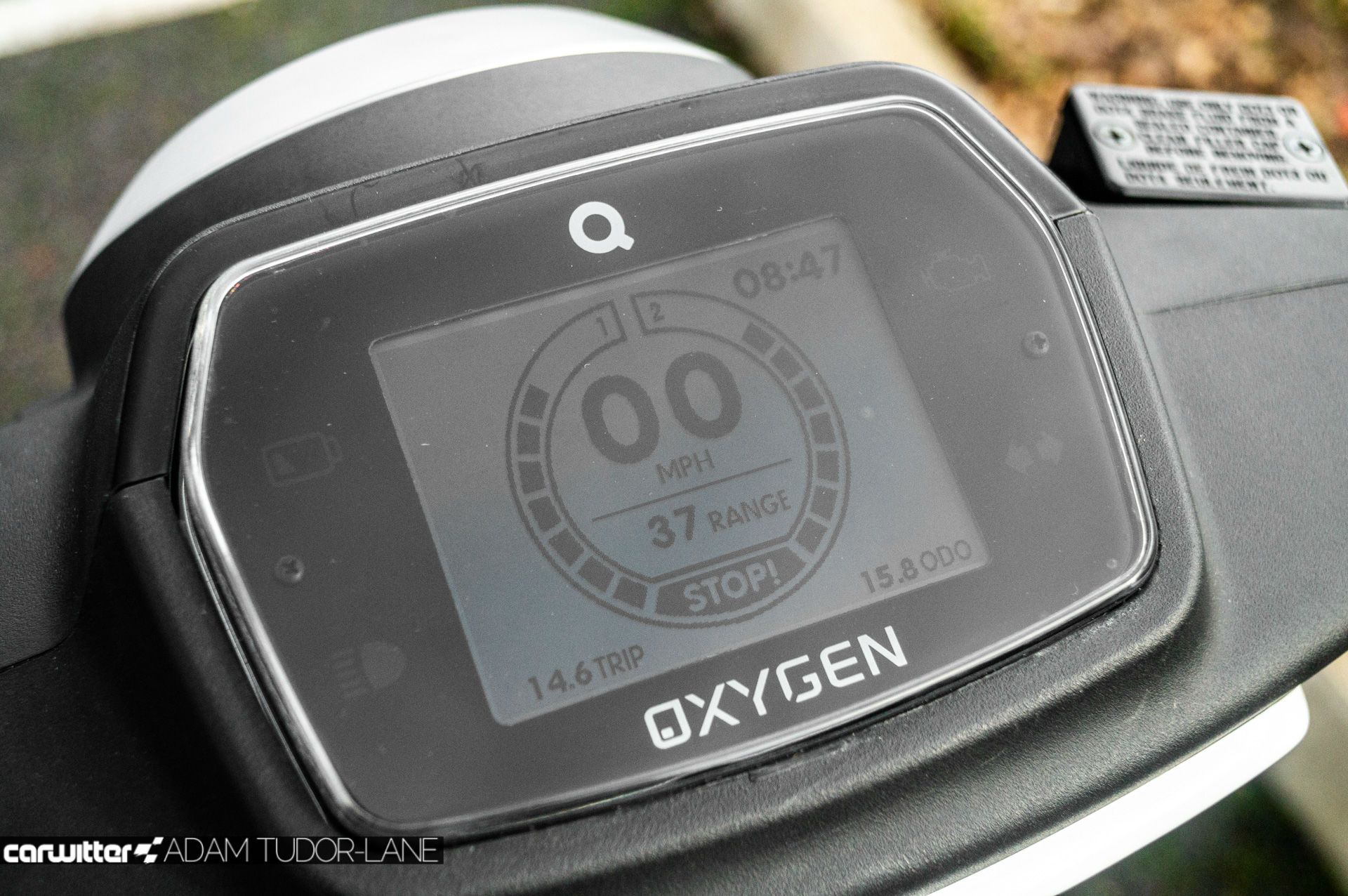
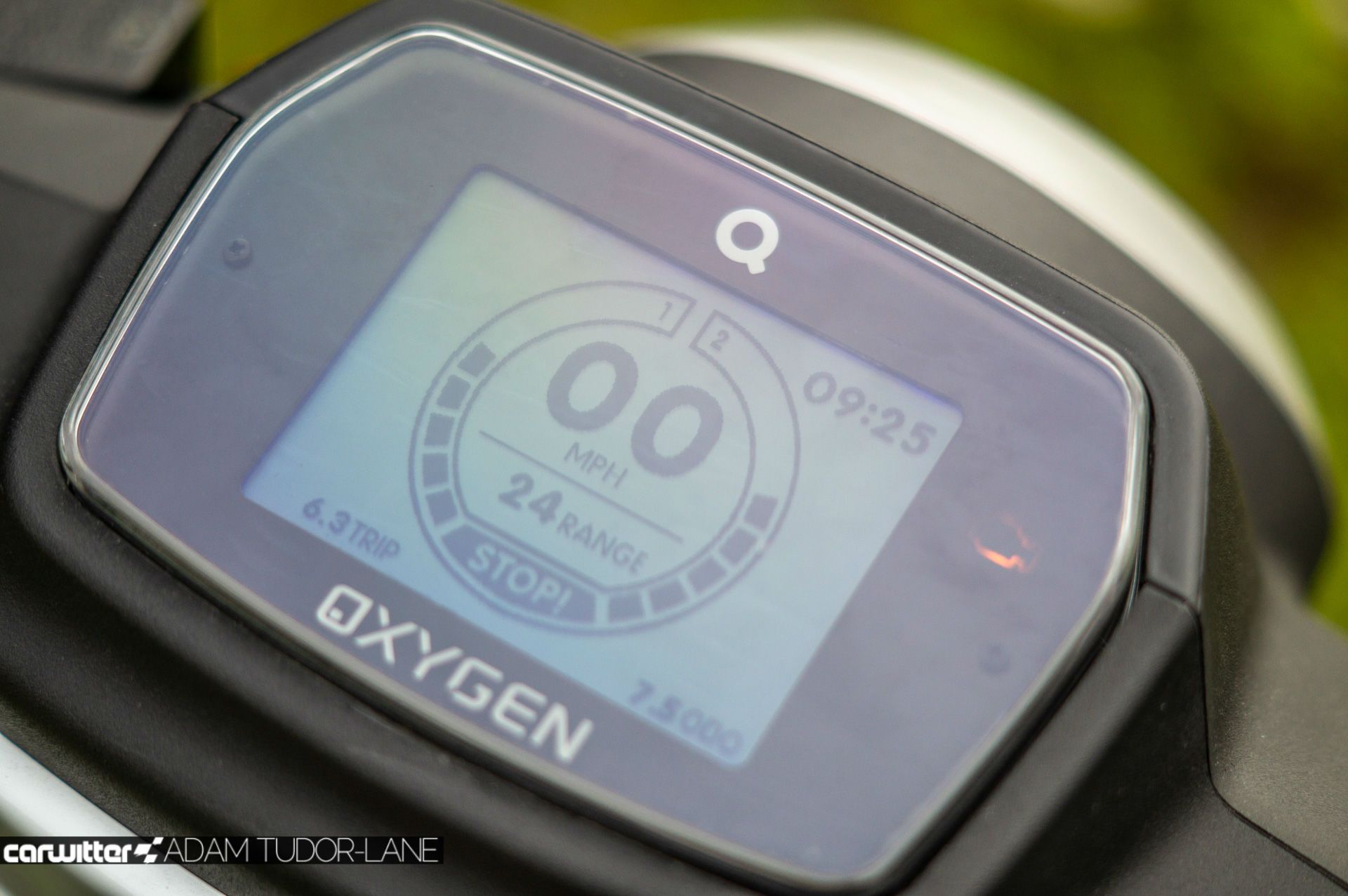
Starting the Oxygen is much like any other bike, key in, turn…but then there’s silence. Looking at the large backlit display, it goes through a self-check, then gives you a large ‘OK 🙂‘ and then you’re ready to go.
Simply hold the left-hand brake and twist the throttle a little until you feel the thing want to go, release the brake, and you’re off.
You’ll get an electric whine and a slight woosh as you set off, the futuristic sound of motors returning whenever you accelerate. It turns a few heads, that’s for sure.
Being belt driven, there’s no rattling, no clunking of gears; the most notable thing while out on my ride was the plastic tag attached to the key flapping against the bodywork. It really is THAT quiet to ride. A real difference compared to the 125’s I’m used to.


Acceleration is instant; torque is limited to 35Nm, which is incredibly high when you look at the likes of my little MSX 125 and its 10.9 Nm. It’s nowhere near as ferocious as an electric car, but it still gives you a reassuring shove whenever you accelerate.
Due to the batteries’ weight, the Oxygen feels pretty solid; that lightweight, bare looking exterior is deceiving. So are the rather narrow tyres. The 16-inch wheels are somewhere between a mountain bike and a traditional moped in terms of thickness, but it always feels surefooted, even in the damp.
In colder weather you’ll get less range, batteries don’t like to be chilly and these have no warming or cooling abilities like a electric car has. Even so the range only dropped to 37 miles on the chilliest of days that I ventured out on the Qooder, that’s still plenty to get around town or to commute on.
There’s an app (of course there is) which you can connect via bluetooth to give you stats on your riding as well as changing the digital on screen dash if you so wish.
Unless you’re of a certain age you will need at least a CBT to ride the Qooder, but they’re easily enough attained.

The only thing that really holds it back is the top speed, while it would be fine for pure urban driving in town centres, the 30-35 MPH top speed would be pretty hairy on a single carriageway. I stuck to diving around the local housing estates, a few are thankfully joined up by underpasses and bridges.
If you’re going to find yourself on more open roads opt for the 3KW model.
Prices are around the £4,000 mark, but are to be revised at some point. The Qooder will be eligible for the plug-in motorcycle grant which would see £1,500 knocked off that RRP.

Qooder Oxygen Conclusion
For a student or commuter in the heart of a city the Qooder Oxygen makes sense, the cost of a full charge will be less than 50 pence, while the silent smoothness of an electric motor makes riding incredibly serene.
Acceleration is nippy off the mark and will get you out in front of the rest of the traffic from the lights, just make sure you charge the batteries in your garage or another room as things get a little loud.

