Are you forever trying to track down random, spurious faults with your car? Does your car seem to struggle to start sometimes?
Well, have you thought about looking after your car battery? Or even changing it…
How does your battery stop faults?
If you’re getting random warning lights, or your car is acting strange you’ll probably book it into a garage to get it checked out.
The first thing they’ll do is connect an OBD fault code reader, this diagnostic tool works off the battery. So if the charge is low you could end up with erroneous error codes referred to as ‘ghost faults’ – just ask BMW i3 owners!
Ghost faults occur when the vehicle attempts to limit power being drawn from the battery (because its charge is low) by shutting down non-essential systems, like the stereo, air conditioning, or start/stop functions, these can then be misinterpreted as faults.
Worksops and garages that are attempting to fix such phantom faults can end up becoming costly and time-consuming, ultimately affecting their efficiency and reputation. To help steer clear of these pitfalls, CTEK offers some essential tips.
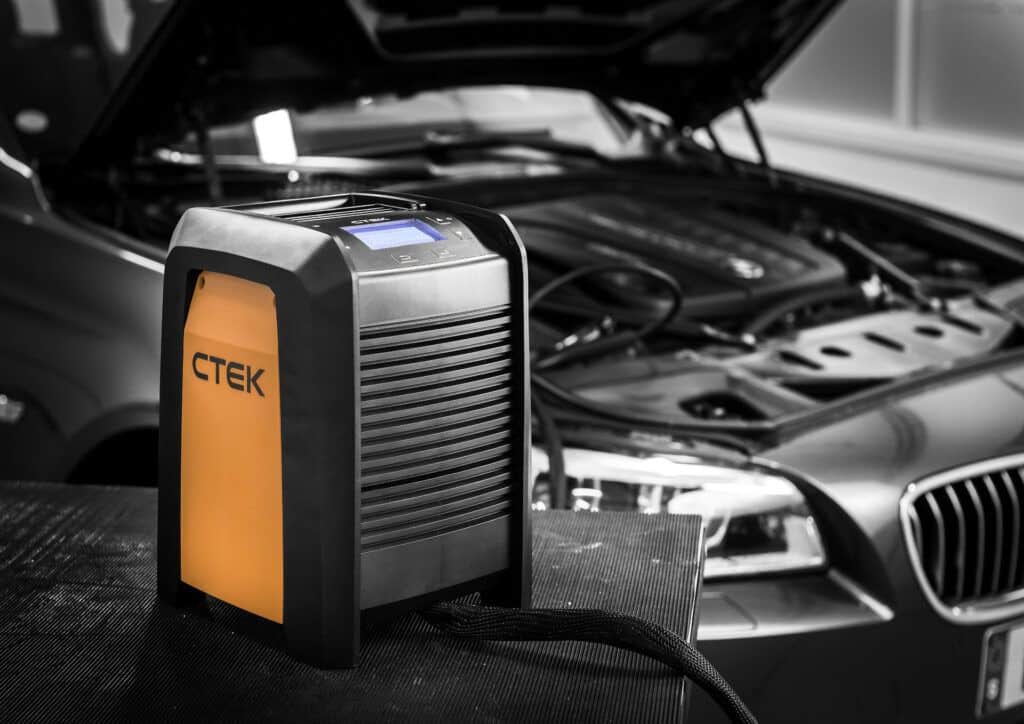
How to stop ghost faults
Before diving into any diagnostics, it’s critical to assess the battery’s condition for low voltage. During diagnostic procedures or servicing, it’s vital to connect the battery to a battery tester and charger. By ensuring that the vehicle’s battery is tested and supported from the outset, workshops can sidestep frustrating and deceptive ghost faults that drain time and resources.
CTEK recommends two crucial steps upon a vehicle’s arrival at your workshop:
-
Battery Testing
Verify if the battery exhibits low voltage by employing tools like CTEK’s PRO Battery Tester.
-
Battery Support:
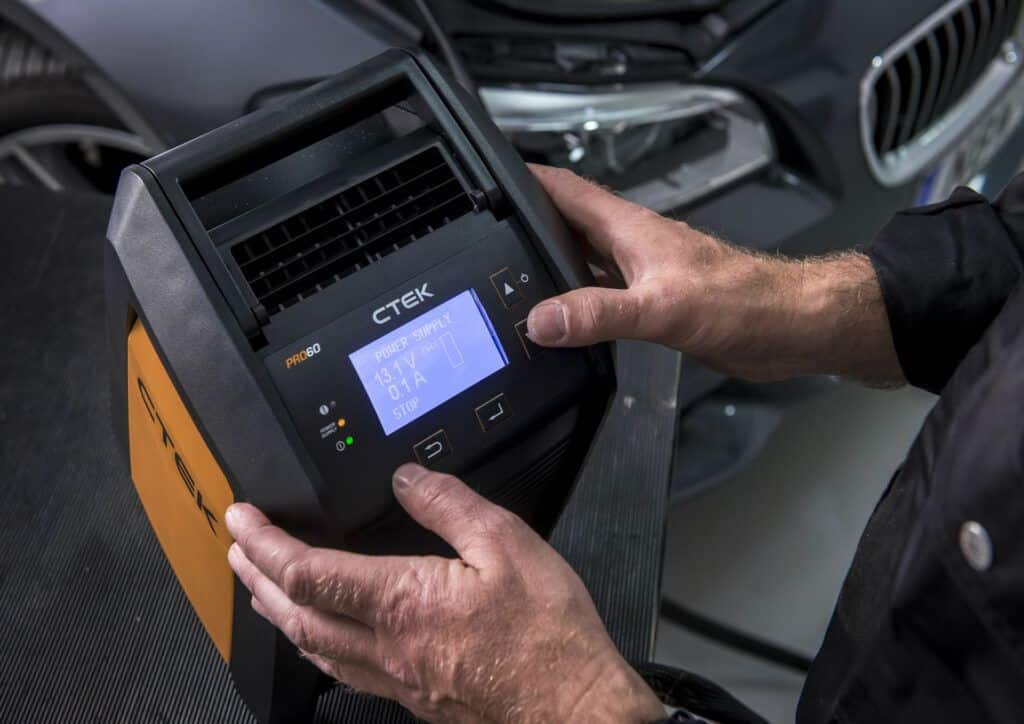
Connect the vehicle to a battery support unit and set it to supply mode before initiating any diagnostic work. Many support units, such as CTEK’s MXTS40, PRO60, and PRO120, allow you to specify the required voltage, preventing potential ghost faults.
For diagnostic equipment to function effectively, the correct voltage supply from a power supply unit is essential. A dependable and sufficient power supply eliminates voltage fluctuations or drops, which can lead to misleading or ghost error indications.
Inadequate or inconsistent voltage may restrict diagnostic reading accuracy and reliability, resulting in an incorrect or incomplete diagnosis.
Mark Poole, Sales Manager for CTEK, said:
We know that around 50% of vehicles entering the workshop have a battery that needs attention – so it’s quite likely the battery will need support throughout any workshop procedure. Using a smart battery charger and support unit means that as well as supporting the battery it will charge it along the way too – protecting against the battery voltage dropping to even lower levels than when it arrived in the workshop.
So, testing and supporting the battery during vehicle diagnostic and service work will give you the confidence that you won’t get spooky ghost fault reports, that can waste time, resources and give you a headache you could definitely do without!
PRO products from CTEK have been designed for use in a professional workshop. They have a stable voltage, a customisable voltage, and de-rating protection. The battery support units are 12V battery compatible and include automatic parallel load compensation.