
A morning coffee at a remote campsite depends on something less exciting than the view: your vehicle’s power supply. A kettle, refrigerator and laptop place different demands on any electrical system, so the appliances you plan to use should guide the equipment you choose. Start with their power requirements, then consider your vehicle’s battery capacity and available charging sources. Your automotive inverter must meet those demands as part of a compatible power system.
This guide explains how to choose a power inverter for travel that suits your appliances and journey.

Start with What You Want to Power
A day in a campervan can involve more electrical equipment than you may expect. The refrigerator may run throughout the trip, while a coffee maker adds demand at breakfast. A laptop may need power during a daytime stop. These appliances determine how much power your system must supply, measured in watts (W), and help establish the inverter capacity you need.
A useful starting point is an appliance list based on your usual travel routine. Check the rated electrical input on each appliance’s label or in the manufacturer’s manual. If the documentation lists both input and output power, use the input figure to assess electrical demand.
The list should also show each appliance’s expected daily operating time and whether it uses AC or DC power. Note which devices you wish to run simultaneously, such as a water pump and television during an evening stop.
Appliances have power ratings measured in watts (W) and consume energy in watt-hours (Wh). For example, a device with a constant 60W demand uses 300Wh over five hours:
60W × 5 hours = 300Wh
This estimate helps establish daily energy needs. Refrigerators need separate consideration, as their compressors cycle on and off, so their rated running power alone doesn’t show total daily consumption. Use manufacturer-provided energy figures where available.
DC-powered appliances also draw energy from the battery directly, even though they do not contribute to the inverter’s AC load.

Match the Inverter to Continuous and Start-Up Demand
An inverter must support the appliances you plan to run simultaneously, including their temporary start-up demands. Its continuous power rating indicates the output it can sustain under specified operating conditions. Compare this figure with the combined input power of your AC appliances during normal operation. A supplier can confirm whether the selected capacity is sufficient for your expected use.
Some appliances need more power briefly when switched on. Refrigerators, vacuum cleaners and water pumps, for example, use motors or compressors that can draw additional power at start-up. Power tools may also require a temporary increase above their normal operating demand. Check your appliances’ specifications against the inverter’s peak output and the duration it can sustain that output.
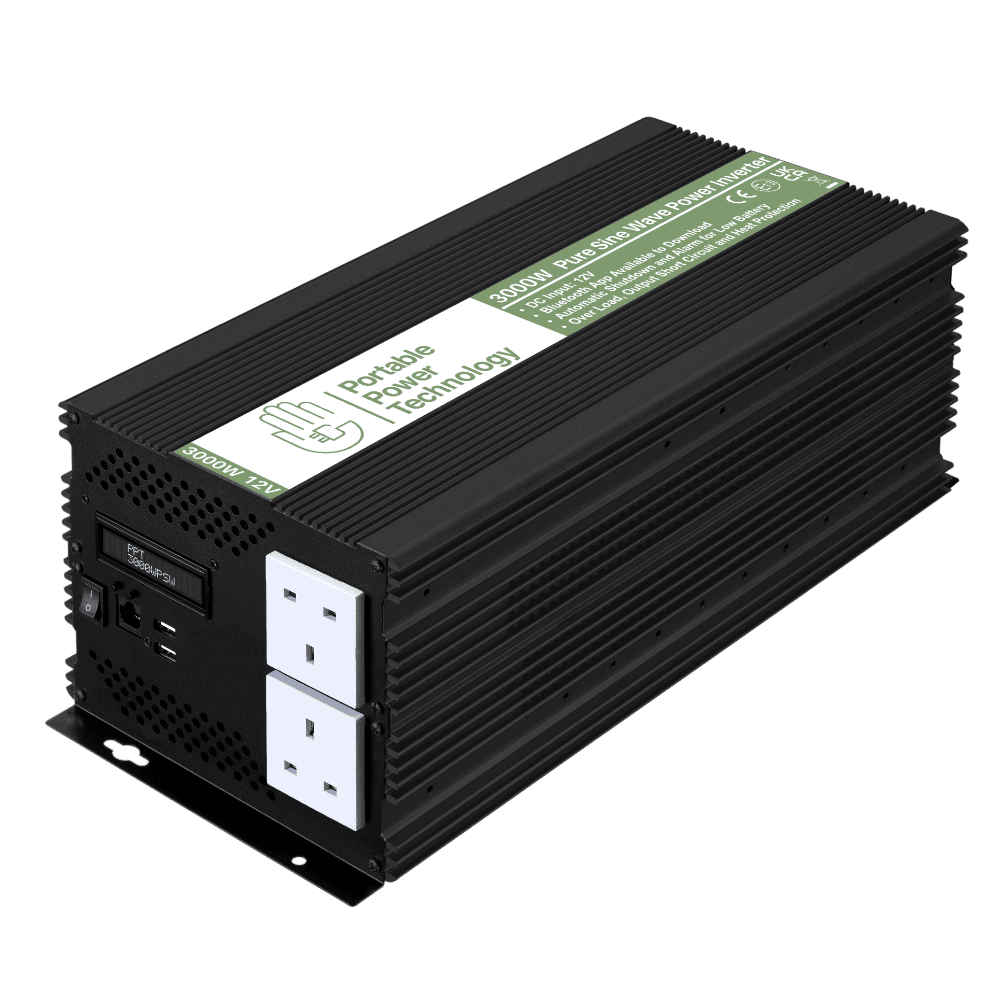
The PPT 3000W 12V Pure Sinewave Inverter may suit a setup that needs to power inductive loads, such as refrigerators or motor-driven appliances. Confirm its specifications against your intended loads before making a choice.
Output waveform matters, too. Pure sinewave inverters produce an AC waveform similar in shape to mains electricity. This can make them suitable for sensitive electronics like speakers, LED displays and motor-driven appliances, although the requirements of each device should guide the choice of inverter. For a power inverter for travel, both output capacity and waveform should match the equipment you intend to use.
Check Whether Your Leisure Battery Can Support the Inverter
A powerful inverter can’t compensate for a leisure battery that lacks sufficient capacity or discharge capability. Battery capacity, usually expressed in amp-hours (Ah) or watt-hours (Wh), indicates how much energy a battery can store. Discharge capability determines how much power the battery can supply at a given moment. Its nominal voltage must also match the inverter’s specified DC input.
For example, a 100W AC appliance running for five hours consumes 500Wh. The battery capacity therefore must supply more than 500Wh of energy to account for inverter conversion losses. Any DC appliances connected to the same battery bank will add to the daily energy demand.
Leisure battery specifications matter just as much as the inverter capacity. The battery must be suitably sized to support the inverter and its intended loads. A specialist should assess usable energy within the battery’s limits as well as its permitted continuous and short-duration discharge current. You should also confirm compatibility with the inverter and battery management system. Cable cross-section and protective-device ratings must also suit the installation.
Temperature can affect performance, too. Battery and inverter operation may vary outside their specified temperature ranges. A suitable vehicle power inverter must work within the limits of the battery and its supporting electrical components.
Plan How You Will Recharge While Travelling
Your daily driving distance and campsite choices affect how much energy you can restore between stops. Longer periods on the road may provide more opportunity for alternator charging than short transfers followed by extended stays at remote sites. Mains hook-ups and solar panels can provide additional charging options, depending on your itinerary.
A battery-to-battery charger can replenish the leisure battery while the engine runs. The amount of energy restored depends on the vehicle, the charger’s rated output current (measured in amperes, A) and driving time, so short journeys may only provide a limited charge.
At campsites with mains hook-ups, recharge time depends on the battery charger’s output and how long the vehicle remains connected. Solar panels can also contribute energy while the vehicle is parked or travelling, provided the system supports charging from multiple sources. Solar output varies with the season, weather and shading, so the panels’ rated wattage alone can’t always guarantee a particular level of daily energy generation.
A realistic charging plan compares expected energy use with the opportunities available on your route. This helps determine whether the leisure battery and charging setup can support your intended use of a power inverter for travel, including days with limited access to external electricity.
Consider the Complete Leisure Vehicle Power System
An inverter is only one part of the electrical setup. It relies on a compatible battery bank and charging equipment. Monitoring and control features can also help you track leisure battery status and power consumption. The vehicle’s existing electrical system also affects which components you can use and how they work together.
A complete power system should reflect your appliance requirements and travel habits. Depending on the vehicle, components may include leisure battery storage, charging equipment for different energy sources, and monitoring tools.
PPT offers power solutions for motorhomes, campervans and adventure vehicles. Explore its Power for Leisure Vehicles range to see how different components can work together in a complete vehicle setup.
When comparing portable power solutions for travel, look beyond individual component specifications. Ask the supplier to explain how the equipment works together, which operating limits apply and what the monitoring system shows. For off-grid power systems, the proposal should also estimate how long the setup can operate without external charging, based on defined appliance use and energy assumptions.

Account for Space, Weight and Installation
Available space in a motorhome or campervan can limit your choice of power equipment. The inverter, leisure battery bank and supporting components all need suitable locations. Compare their combined dimensions with the available installation space and their total weight with the vehicle’s payload capacity.
Ventilation also affects equipment placement. Inverters can generate heat during operation, and restricted airflow can cause overheating or shutdown. Manufacturer specifications set the required cooling clearances and environmental limits. Temperature and moisture exposure are also important factors, particularly in storage compartments.
The installation should leave enough room for inspection and routine maintenance without removing other fittings.
High-power inverters and associated electrical equipment require careful specification and installation. A competent specialist should assess the mounting arrangements and ventilation against the manufacturer’s instructions. They should also check cable routing and electrical protection. The finished installation should suit the vehicle and its intended use.
Test the Setup Before a Longer Journey
A pre-trip trial can reveal whether the completed power system meets your everyday needs. Once installation and commissioning are complete, you can test it with the appliances you expect to use during a typical day. Include refrigeration and your usual cooking routine, as well as devices likely to operate at the same time.
Follow the installer’s operating instructions. Use the available monitoring tools to check the leisure battery’s state of charge and charging activity. If the system displays appliance power consumption, these readings can help you understand your daily energy use.
Compare the results with the supplier’s assessment. Note any warning messages or unexpected interruptions. Changes in battery level during use and recharging can help identify whether the system performs as expected. This provides a more realistic basis for judging how well the complete setup can support your planned routine when using a power inverter for travel.
The responsible specialist should investigate any unexplained alarms or shutdowns before departure. Do not alter wiring, protection devices or technical settings during the trial.

Conclusion
That morning coffee at a remote campsite takes more than an inverter with the right wattage. You need a system sized to your appliances, supported by a suitable battery and matched to the charging options available along your route. Before choosing an automotive inverter, consider what you plan to power, how long you will be away from mains electricity and when you can recharge. Discuss these requirements with an experienced vehicle power specialist. Their advice can help you choose a setup that lets you spend less time managing power and more time enjoying the journey.
