
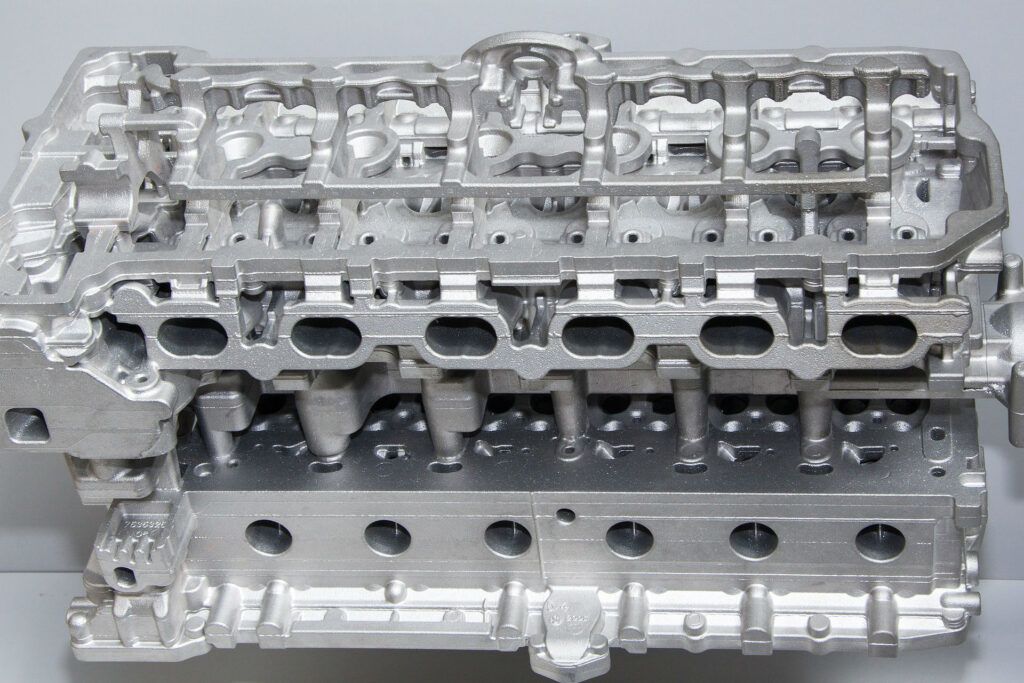
The cylinder head is a crucial part of an internal combustion engine. It sits above the cylinders and forms the sealed roof of the combustion chamber. It also allows air and fuel to flow in while the exhaust gases flow out. It’s also where the spark plugs and fuel injectors sit.
Additionally, the cylinder head is responsible for cooling the engine using either water or air, as it’s subject to high temperatures and pressures, and its component parts have to withstand these conditions.
The cylinder head is made up of several components, including the valves and fuel injectors, which must be calibrated precisely to ensure proper combustion.

Maintenance and Repair of a Cylinder Head
As the cylinder head is a crucial part of every engine, it’s important to be aware of common issues that can arise. Symptoms of head problems include overheating, poor engine performance, oil leaks, a drop in coolant level, and reduced power. One common issue is a warped head, which can be caused by overheating, uneven forces from head bolts, or a blown head gasket.
Overheating is also a leading cause of head cracking, which can cause significant damage to the engine. It’s important to be aware of these issues to prevent further damage and maintain the health of your engine.
If you’re head is damaged, resurfacing can restore it to its original tolerance and create a perfect seal, while lubricating bolts according to the manufacturer’s instructions can prevent damage. Heads are often removed for gasket failure, valve failure, warpage, and cracking.

Image of a cylinder head gasket provided by euspares.co.uk
When you need to repair or replace the head, there are several options available. Cylinder head repair involves processes such as welding cracks and machining warps.
Rebuilding the head means fixing broken components like springs, valves, injector sleeves, or guides. It’s important to ensure that the replacement cylinder head or head gasket fits your engine and to have it installed by a skilled professional.
A reputable shop should be able to replace hard valve seats, restore valve guides, and resurface heads to OEM specifications. By understanding the repair and replacement options available, you can make informed decisions about maintaining your engine’s performance.
